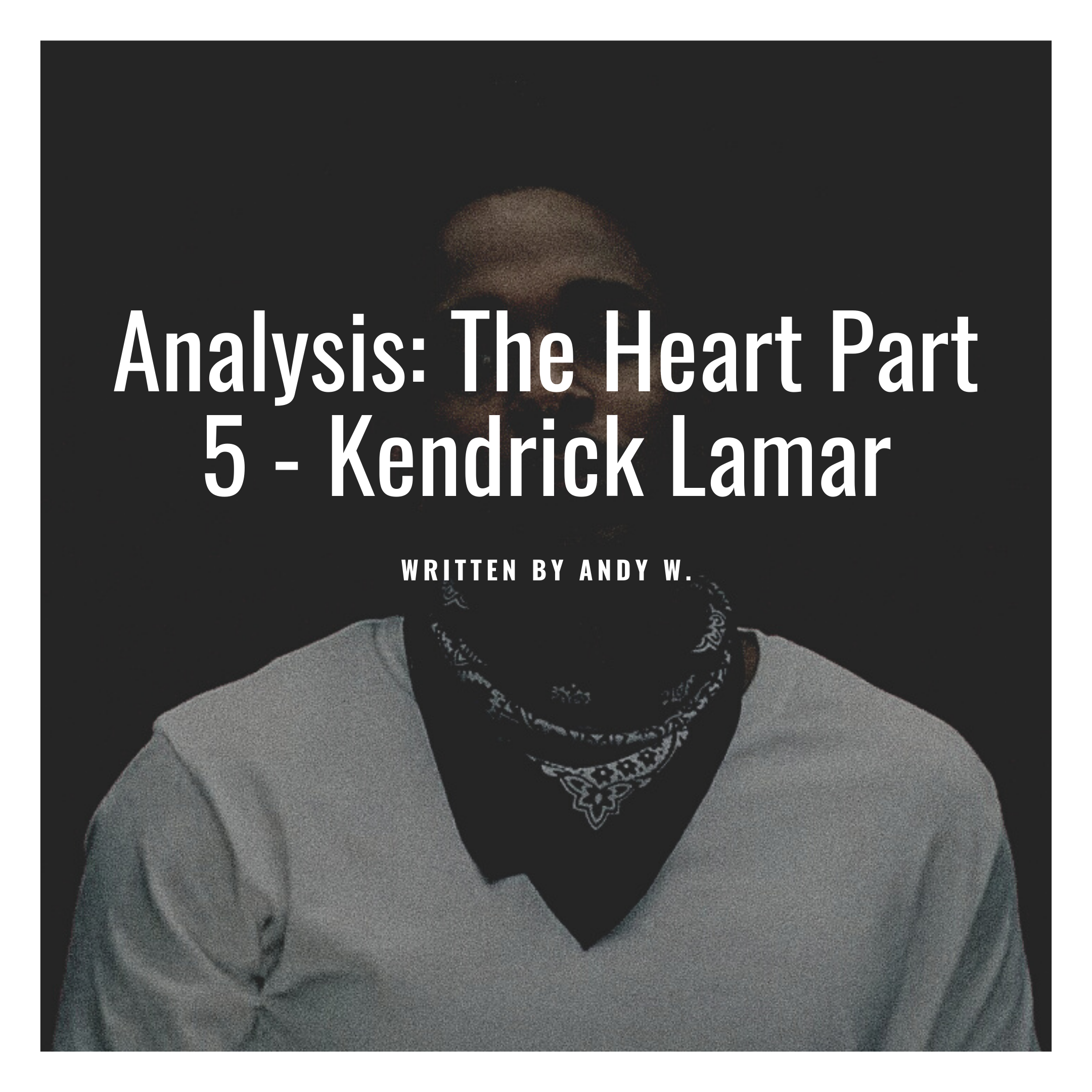
Analysis: The Heart Part 5 - Kendrick Lamar

He’s back. After five long years since the release of his fourth studio album DAMN., Kendrick Lamar has returned. To classify him only as a musician or rapper seems like a disservice; instead, I prefer to refer to him as an all-around artistic genius. His previous projects, from the critically-acclaimed good kid, m.A.A.d city and To Pimp A Butterfly to the aforementioned Pulitzer prize-winning DAMN., discussed a wide range of topics and themes like systemic racism, societal injustice, and self-empowerment. Most of these amazing eras, sonically and thematically unique from one another, were preceded by a stream-of-consciousness-style single that, together, make up “The Heart” series. The same is true for his upcoming highly-anticipated album Mr. Morale & The Big Steppers, as just yesterday, Kendrick Lamar released “The Heart Part 5”.

The unexpected and atypical release is easily my favorite from “The Heart” series. Unlike ever before, Kendrick released a music video alongside the song. Seemingly simple at first, with Kendrick performing in front of a red backdrop, it quickly becomes apparent that the visual aspect of this song is just as important as the written lyrics. In spoken word format, Kendrick opens the track by discussing how he’s realized, as he’s grown older, that understanding varying perspectives is hugely important in life, and that his perspectives on issues might differ from his listeners’. Suddenly, then, Kendrick ballistically starts his first verse, which explores his upbringing and the lifestyle he grew up trying to escape. This time around, instead of just depicting the atrocities he has seen growing up with gang affiliations as he has done previously, Kendrick begins to critique “the culture” he sees around him that perpetuates and sustains a lifestyle that leads to generational suffering among his community. The chorus follows, utilizing a classic funk sample from Marvin Gaye and introduces the topics to follow, with the lyrics: “I want the hood to want me back / Look what I done for you.”

In verse two, Kendrick demonstrates the reflections he has done on the importance of perspective by utilizing DeepFake technology in the song’s music video to “transform” into various icons whose relevance and important we will discuss later. This visual effect is jarring at first, but serves an important purpose in communicating that Kendrick is stepping outside of himself for this single, and will likely do the same on the following album, evidenced by the “I Am. All of us.” quote that starts the music video. Kendrick continues to discuss “the culture,” describing how desensitization to atrocities and exploitation have normalized inequality, especially in impoverished Black communities. By embodying the likes of O.J. Simpson, Kanye West, Jussie Smollett, and Will Smith, Kendrick argues that these culturally iconic Black men have moved their communities forward despite their shortcomings or the controversies they’ve found themselves in, but that those controversies are ultimately still damaging. Brilliantly, Kendrick pairs each DeepFake with relevant lyrics, such as “Friends bipolar” for Kanye West and “Hurt people hurt more people” for Will Smith.

On verse three, the drums drop out of the instrumental, and Kendrick begins discussing a way out of the systemic and perpetual struggles that his community continues to face: “Celebrate new life when it come back around / The purpose is in the lessons we learnin’ now / Sacrifice personal gain over everything / Just to see the next generation better than ours.” The third verse sees Kendrick transform into Kobe Bryant and Nipsey Hussle, two extremely culturally impactful Black men who were once embroiled in their own controversies only to eventually overcome them to serve change to those around them. “Reflectin’ on my life and what I done / Paid dues, made rules, change outta love / Them same views made schools change curriculums / But didn’t change me starin’ down the barrel of that gun'“ addresses the elephant in the room: untimely demise. Kobe Bryant became a cultural role model before his tragic death, and Nipsey Hussle vowed to better his community after prior gang involvement before being killed. On The Heart Part 5, Kendrick speaks from their perspectives and says that even though they were taken too soon, they should regret nothing because of the positive impact they had on those around them - despite the cost. The song closes on a hauntingly beautiful tribute to Nipsey Hussle from his perspective, and the closing lines “And though my physical won’t reap the benefits / The energy that carry on emits still”, a play on words and striking reference to Emmett Till, whose horrifying lynching was a turning point of the Civil Rights movement in the 1950s - a spot-on personification of paying the ultimate price of tragedy to spark an absolutely necessary movement.

Kendrick Lamar has once again proven his genius artistry with The Heart Part 5, and the most incredible part is that it likely won’t even be on his upcoming album. By defining and outlining both the problems his community faces and ways to fix them by embodying cultural icons, Kendrick sets the tone and precedent that the rumored double album Mr. Morale & The Big Steppers is going to be a very contemplative and dense project. My expectations are now at an all-time high, and I hope Kendrick continues to discuss topics like the separation of art and artists, the misnomer idea of a “cancel culture”, and the importance of art in search of solutions to society’s most pressing issues. This was everything I hoped for in the past five long years, and Friday’s album drop can’t come soon enough.

One Year Post-Grad

One year ago today, I graduated college with a Bachelor’s degree in English from Georgia State University. Four years of hard work, growth, challenges, and determination culminated in the payoff of receiving my diploma and recognition at our Class of ‘21 ceremony. My time at Georgia State will always hold a special place in my heart - it’s where I met the love of my life, where I refined and honed the skills I still use every day, and where I grew more as a person than in any other phase of my life. As I’ve started to see photos and videos being posted online of the Class of ‘22’s graduation ceremonies, I’ve been reminded of the excitement and joy that day brings, but also of the uncertainty that comes alongside those highs.

Those of us who are fortunate enough to attend and graduate college live very regimented and straightforward lives up until the big day, for the most part. In pre-school, middle school, high school, and college, there are rigid guidelines that directly tell you what success looks like. You are told where to be every day and when to get there. You’re told exactly what’s needed from you to get good grades, recognition, and rewards like scholarships. The loss of that direction by the time of college graduation can lead to a daunting, existential reflection that makes you ask “now what?”

But that is when you use the skills you’ve gained over the years more than ever before. The lack of direction shouldn’t be perceived as intimidating or scary, but instead as an opportunity to embrace the journey of young adulthood and of life altogether. In my first year post-grad, I’ve been proud of the steps I’ve taken to elevate my circumstances, and I’m confident in what the future has in store for me. I’ve moved in with my wonderful girlfriend, am coming up my first anniversary at a job that supports and engages me, and have maintained healthy relationships with those around me. None of this was by mistake, but none of it was necessarily difficult, either; instead, it only took me relying and trusting myself as an able, capable lifelong learner who embraces and learns from challenges that arise.

The freedom that graduating gives you is liberating. You are able to create your own schedules, define what success what looks for yourself, and create your own guidelines that define what makes a day good or bad. Instead of competing with others for grades, results, and scholarships, you are able to compete with who you were yesterday for growth, maturation, and fulfillment. I’m as confident in my own skin and in myself as I have ever been, and that’s because I’ve embraced and accepted that there is always so much room left to grow, but that steady improvements and small wins fuel that growth every day.

To those who are graduating this year: Don’t be afraid. Now is the time to reflect on how far you’ve come, look forward to how far you’ll go, and be patient with yourself as you navigate life post-grad. Now is also the time to rely on your support systems, and make sure they know how much you appreciate them. Tell your past self how proud you are, and tell your future self you can’t wait to watch things unfold. My first year post-grad has been everything I could’ve hoped for, and I can’t wait to continue this amazing ride.

Album Review: It's Almost Dry - Pusha T

New York native and skillful rapper Pusha T cemented his spot as one of the hardest-hitting and aggressively passionate rappers alive in 2018 with the release of his critically-acclaimed album DAYTONA. Part of Kanye West’s legendary run of producing albums for other artists, Daytona’s lightning-in-a-bottle production saw Pusha T delivering ruthless bars over powerful instrumental beats. Luckily for fans of DAYTONA, Pusha T’s newest album also enlists Mr. West’s production skills while also calling upon Neptunes legend Pharrell Williams to make beats for the project. Pusha has given fans exactly what they wanted from this project, which is a slightly more playful but still impressive cropping of songs that stay true to the rest of his discography.

The album’s opening track “Brambleton” utilizes a bouncy trap instrumental and lets Pusha air out grievances about his previous manager Geezy. Pusha T has never been one to avoid confrontation or conflict, and by setting the tone so directly as early as track one, he’s reminding his colleagues to never forgot who they’re dealing with when interacting with him. Pharrell’s production is immediately recognizable on this track with his signature sonics again making an appearance. The next track, “Let The Smokers Shine The Coupes”, takes inspiration from the sounds of classic rap tracks from the likes of RZA and the Wu-Tang Clan. Notoriously known for his many references to cocaine, Pusha T brings out one of his funniest drug-related bars yet as he calls himself “Cocaine’s Dr. Seuss.” “Dreamin Of The Past (feat. Kanye West)” is one of my favorite songs on the project, as it uses a soulful sample flip similar to those found earlier on in Kanye’s discography. braggadocious and the furthest thing from humble, this track lets Pusha and Kanye emulate the self-important energy that fueled the confident DAYTONA four years ago.

“Neck & Wrist (feat. JAY-Z and Pharrell)” uses its features extremely well, and lines like “Summertime, Winterfell / I’m the Night King” demonstrate Pusha T’s occasional tendency to work in niche pop culture references into his verses. I’m also a sucker for JAY-Z features, as he’s consistently able to prove why he’s considered one of the best rappers of all time. “Just So You Remember” uses an instrumental that sounds to me like it was left on the cutting room floor of Kanye West and Kid Cudi’s KIDS SEE GHOSTS and features some of the most savage lines on the entire project. “Seein’ you rappers apply for the stimulus / Livin’ a lie, but die for your images” and the intense delivery of “Just so you remember who you’re dealing with” stand out as highlights on this track. “Diet Coke” was the lead single for this project, and I still see it as one of the best Pusha has put out in years. Kanye’s production is immaculate, and Pusha’s singing delivery on the chorus is a nice change of pace from his typical cadence.

“Rock N Roll (feat. Kanye and Kid Cudi") is probably my favorite song on the album, bringing back the members of KIDS SEE GHOSTS together for one final collaboration according to Cudi. It seems that whatever beef the two of them are having is serious enough to commit to avoiding each other over tracks. Drama aside - the playful production on this track is addicting. The Beyoncé sample, passionate verse from Ye, and great contributions from Pusha and Cudi result in a fantastic track overall. “Call My Bluff” is one of the more forgettable cuts on the album, but it’s hard to tell if that’s just because it’s in the shadow of the song coming before it. Its production is still clean and simple, but Pusha’s lyrical delivery seems more subdued here than I would’ve preferred. “Scrape It Off (feat. Lil Uzi Vert & Don Toliver)” is another oddball for me, as it sounds completely out of place on the tracklisting. The features make for interesting collaborations, but It’s Almost Dry has established an aesthetic up to this point that just doesn’t match this song’s vibe.

“Hear Me Clearly (feat. Nigo)” is the same track found on Nigo’s most recent album I Know Nigo!, and while I enjoy the song, it feels like Pusha’s verses would instead be found on one of his features instead of one of his tracks - the same criticism I had on Nigo’s project. “Open Air” features one of the hardest beats on the project, and while this song is only 2:12, it makes the most of its short runtime with killer bars and confidence. “I Pray For You (feat. Labrinth & MALICE)” is likely Pusha’s strongest closing track to date, with hymnal and gospel-esque production. Appearances from Clipse are few and far between, so I’m glad that their collaborations here lived up to my sky high expectations. Pusha closes the project discussing his accomplishments and how far he has come - great introspection from an often ruthless artist.

Pusha T has done exactly what I look for from artists, which is growing thematically and sonically while retaining the fundamental elements of what makes them who they are. One of the most lyrically intricate and skillful artists in the game, Pusha has yet again proved that he has what it takes to hang with the best. Great features, a refined tracklisting, and stellar production make It’s Almost Dry another great album from Pusha and one of the best hip-hop records of 2022 so far.

Favorite tracks: “Brambleton”, “Let The Smokers Shine The Coupes”, “Dreamin Of The Past (feat. Kanye West)”, “Neck & Wrist (feat. JAY-Z & Pharrell Williams)”, “Just So You Remember”, “Diet Coke”, “Rock N Roll (feat. Kanye West & Kid Cudi)”, “Open Air”, “I Pray For You (feat. Labrinth & MALICE)”

SCORE: 8/10

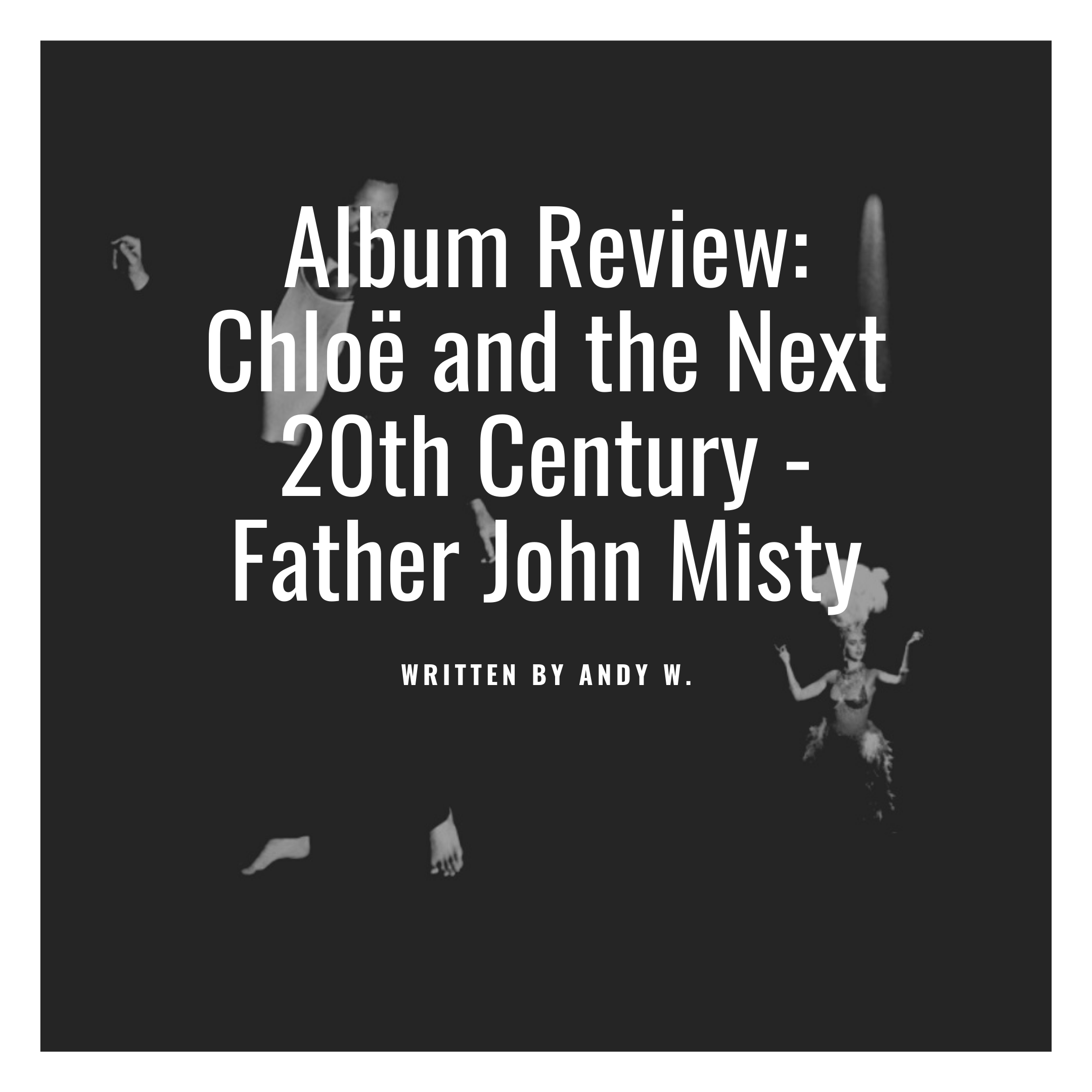
Album Review: Chloë and the Next 20th Century - Father John Misty

Eclectic singer-songwriter Josh Tillman, more colloquially and widely known by his provocative stage name Father John Misty, has garnered a reputation for his lush production, witty sarcasm, and ear-catching musical talent. Since leaving his role as Fleet Foxes’ longtime drummer, Tillman’s four solo studio albums have received much fanfare and critic adoration. Each “era” has seen Tillman transform and mature in some way, all while retaining the core characteristics that define his truly unique persona. Most recently, Tillman’s 2018 record God’s Favorite Customer was a revelatory and brutally honest self-reflection on what appeared to be a rock bottom for the typically stable yet contemplative artist. Now more than ever, I find myself eager to hear what kind of artistic direction musicians are going to take after the darkest days of the COVID-19 pandemic. Instead of more self-loathing like on GFC, or silver-lined nihilism on the perfect Pure Comedy, or even more of the intricately and sublime love songs found on I Love You, Honeybear, Tillman has yet again decided to take his sound in a new direction. By embracing the glitzy, cinematic production popular during the 1950s and earlier, Tillman makes a statement about the state of current culture’s response to earlier generations’ shortcomings on his newest album Chloë and the Next 20th Century.

Character portraits have long been one of Tillman’s strong suits, and this songwriting technique is utilized in the album’s opening title track “Chloë”. Seemingly at first a loving portrayal of the title character, Chloë’s story ends tragically and unexpectedly just as soon as the album’s first track comes to a close. I find this begrudging acceptance of Chloë’s flaws in exchange for Tillman’s adoration ending so painfully a great metaphor for our tendency to view the past with rose-colored glasses. The upbeat instrumental refrain that follows the line “her soul is a pitch-black expanse” is a perfect juxtaposition that culminates in the song’s compelling final lines. “Goodbye Mr. Blue” follows, and we see Tillman embrace more of a bluegrass influence with plucking acoustic guitars that back his wonderful storytelling. This track is heartbreaking in many ways, as it depicts the feline remnants of a failed relationship meeting its end, thus signaling the true ending of any hopes of the couple ever getting back together - this song is about much more than losing a beloved pet. “Kiss Me (I Loved You)” establishes a vintage aesthetic with a retro-style vibrato overlay on Tillman’s vocals, and seems like a logical continuation of where the previous track left off. Tillman’s genius lyricism shows up yet again, with “Love is much less a mystery / Than who you give it to” standing out to me.

“(Everything But) Her Love” is next, and while I enjoyed the somewhat psychedelic and 60s-inspired production, I don’t follow or relate to the track’s narrative as closely as others on the project. “Buddy’s Rendezvous” follows and has quickly joined the conversation about my favorites from Father John Misty’s entire discography. Told from the perspective of a father who is reunited with his daughter after serving time in prison, this atmospheric ballad subverts its theme of questionable advice by asking some truly profound questions itself - an immediate standout served well by Lana Del Rey’s cover, too. “Q4” is next, building on Chloë’s narrative by introducing a writer sibling and outlining her rise and fall. This track dissects the advertising industry’s tendency to use tragedy to its advantage, twisting them and describing them as “deeply funny,” when in reality that depiction is the furthest thing from the truth.

“Olvidado (Otro Momento)” steps into the back half of the record, and while certainly experimental in nature, this Bosso Nova track doesn’t fit extraordinarily well into the tracklisting either thematically or sonically, so this is a miss for me. “Funny Girl” was the lead single for the project, and fits in very well in the context of the entire project. Stylistically, this laid-back delivery and swanky production matches the rest of the album’s aesthetic, with a gorgeous instrumental refrain that is one of the biggest highlights here. “Only A Fool” features playful and easygoing instrumental backings, sounding like it would fit in well with a Pixar score. This song leans on the multi-instrumental orchestral band that backs Tillman’s vocals, but not to its detriment; this lavish production keeps me coming back repeatedly. “We Could Be Strangers” is one of the more narratively creative tracks on the album, while at first seeming only like a typical depiction of attempting to revitalize a fleeting love interest, only to be revealed that the couple in this story’s narrative is making the most of their final moments after being in what will prove to be a fatal accident. This twist of fate is one only Tillman could execute as well as he does.

The second title track and closer, “The Next 20th Century”, proves yet again that Tillman truly understands how to effectively finish his projects on high notes. He did so with “I Went To The Store One Day” on I Love You, Honeybear, again with “In Twenty Years Or So” on Pure Comedy, and now again with Chloë and the Next 20th Century. Sonically similar to the tracks that preceded it, “The Next 20th Century” finds an intensity and directness from Tillman’s vocal delivery not found previously on the album. Industrial at times with a samba-like undertone, the track is suspenseful and builds gradually as Tillman depicts the shortcomings of the entertainment industry and American society as a whole over the past 100 years. In many ways, this record is simultaneously an homage to the nostalgic sound that perpetuated many of today’s best artists while also serving as a scathing critique of how the culture that same sound was built by was inherently coercive and disadvantageous for so many. The final section following the monstrous and badass guitar solo is worth highlighting as some of Tillman’s best writing yet. It’s worth a read and a listen: “The wheel is turning from night into day / Everything’s in transition, everything must change / But none of us here will ever see the promised land / None of us here will be there for childhood’s end / I see ya’, you student debtors - in a watchtower overhead / Searching for headlights in the driveway crying “Dad, look what they did” / Just look: Even their romance made us masters and slaves / And now things keep getting worse while staying so eerily the same / Come build your burial grounds on our burial grounds / But you won’t kill death that way / I don’t know about you, but I’ll take the love songs / Give you the future in exchange.” Here, Tillman masterfully depicts the shortcomings of previous generations and highlights their propensity to continue into the future, choosing himself to instead focus on and embrace the power of music instead of the overwhelming inequity that we find ourselves navigating still.

Unlike Pure Comedy, I don’t think Chloë and the Next 20th Century is a perfect album. At times, its many narratives, scattered references, and sonic decisions come up short, leaving me wishing that Tillman slightly refined some of these aspects for the final product. That being said, the vast majority of this project highlights Tillman’s unmatched ability to approach new sounds, concepts, and aesthetics all while retaining what makes him such a unique and personable artist. Chloë and the Next 20th Century is an exceptional critique that utilizes the best of what it’s commenting on to highlight the worst of it. I believe that this project will age incredibly well and that Tillman’s foray into this vintage style will have been very much worth it. This is a great album that rewards patience and critical listening, and while many may find it challenging, I enjoyed it immensely from beginning to end.

Favorite tracks: “Chloë”, “Goodbye Mr. Blue”, “Kiss Me (I Loved You)”, “Buddy’s Rendezvous”, “Q4”, “Funny Girl”, “Only A Fool”, “We Could Be Strangers”, “The Next 20th Century”

SCORE: 8/10

I Beat Elden Ring

Elden Ring took the gaming world by storm upon its release less than two months ago. While some savored the exploration of the vast, open-world environment of The Lands Between, others with less patience continued to press their luck against bosses and regions far above their skill set and experience level. I found myself in the second camp, as I often do, looking to grind my way through challenges to achieve the maximum results possible as quickly as possible. In Elden Ring, this means reaching the end of all quests, discovering all areas, defeating all necessary bosses, and finally tackling the final foes: Radagon of the Golden Order and The Elden Beast.

While it would take many blog posts to properly discuss and explain the rich lore and backstory behind this final boss fight, I can succinctly say that FromSoftware made the right choice making this the final duel along this incredible journey. The two-part fight consists of a matchup against a more traditional yet challenging opponent in Radagon of the Golden Order, and then an ethereal battle against the Elden Beast, who the game refers to as a “God” upon its death. Frustrating, attention-demanding, and eventually extremely rewarding, this final boss fight was everything I hoped for to finish Elden Ring.

Luckily, the fun doesn’t stop when the credits roll. In a world as vast as that of Elden Ring, there is still so much to discover and accomplish in the world even after the main story is complete. And even then, the game presents the option to reset the world while retaining all of the collectibles, armaments, and materials gathered along the way in “New Game +,” which is a feature I’ve enjoyed since my formative years on console since series like Ratchet and Clank.

New Game + allowed me the opportunity to relive the joy of finding new enemies, map locations, and weapons, while this time focusing less on the easy-to-learn but hard-to-master combat mechanics the game has to offer. While walkthrough one took me more than 80 hours to complete (you read that right,) New Game + was complete in just about 10 hours, as a ran my way from boss to boss on a wonderful victory lap from Limgrave to Leyndell.

Even though I have now beaten Elden Ring (twice,) there’s still so much to do in this game that I don’t see putting the controller down for good any time soon. There are incredibly difficult optional bosses to tackle, more areas to discover, and plenty to re-visit with all of my best gear. This game certainly won’t be everyone’s cup of tea, but the attention to detail, intricate and beautiful storyline, and satisfying gamplay are unmatched, making Elden Ring one of my favorite games of all time, let alone being a lock for game of the year in 2022. If you’re looking for an immersive gaming experience, look no further - and arise, ye tarnished!